
The Silent Killer That Took Senator Lindsey Graham: Understanding Aortic Dissection
The sudden death of Senator Lindsey Graham has brought this dangerous condition back into focus

The recent sudden death of Senator Lindsey Graham at age 71 has brought national attention to a little-known but deadly cardiovascular condition: aortic dissection. According to preliminary findings from the District of Columbia’s medical examiner, Graham died from “aortic dissection due to arteriosclerotic cardiovascular disease” just hours after returning from a trip to Ukraine, with no prior reported illness.1 2 This tragedy highlights how silently and swiftly this condition can strike, even in seemingly healthy individuals.
Although reported as a ‘heart attack’, this condition is anything but. Yes, the heart could stop as a result of the condition (cardiac arrest), but by that time, the situation is not redeemable.
What Exactly Is an Aortic Dissection?
The aorta is the largest artery in your body, responsible for carrying oxygen-rich blood from your heart to the rest of your body. An aortic dissection occurs when a tear develops in the inner layer of the aortic wall. As blood surges through this tear, it causes the inner and middle layers of the aorta to separate (dissect), creating a false channel where blood can flow.3
Think of it like a split in a garden hose - blood can pool between the layers of the artery wall, potentially causing the aorta to rupture or blocking blood flow to vital organs. When blood escapes through the outer wall of the aorta, the condition is often fatal.4 This medical emergency affects approximately 5-30 people per million each year, though the exact numbers may be higher as some cases are never diagnosed.
Types of Aortic Dissection
Aortic Dissection Classification Systems
Aortic dissections are categorized using two primary classification systems—the Stanford and DeBakey classifications—which help determine treatment approaches and predict outcomes.
The Stanford classification, more commonly used in clinical practice, divides dissections into two types based on whether the ascending aorta is involved: Type A affects the ascending aorta (regardless of where the tear originates) and requires immediate surgical intervention due to the high risk of complications like cardiac tamponade or aortic valve rupture; Type B involves only the descending aorta and is typically managed first with aggressive blood pressure control unless complications develop.
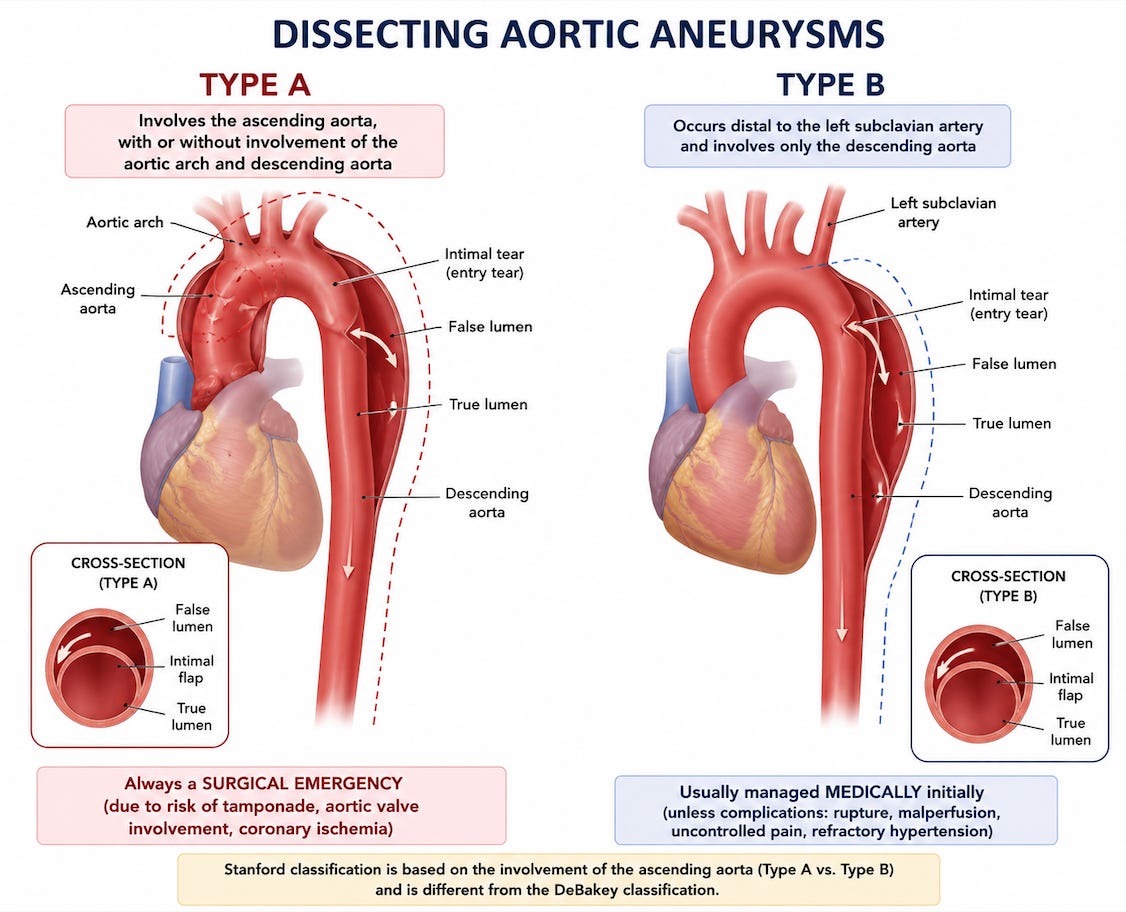
The DeBakey classification, used by radiologists, provides more anatomical detail with three types: Type I originates in the ascending aorta and extends throughout the aorta; Type II is confined to the ascending aorta only; and Type III begins in the descending aorta and may extend distally (with IIIa limited to the thoracic aorta and IIIb extending into the abdominal aorta). While both systems remain clinically relevant, the Stanford classification’s simplicity (focusing primarily on whether the ascending aorta is involved) has made it particularly valuable in emergency settings where rapid treatment decisions are critical.
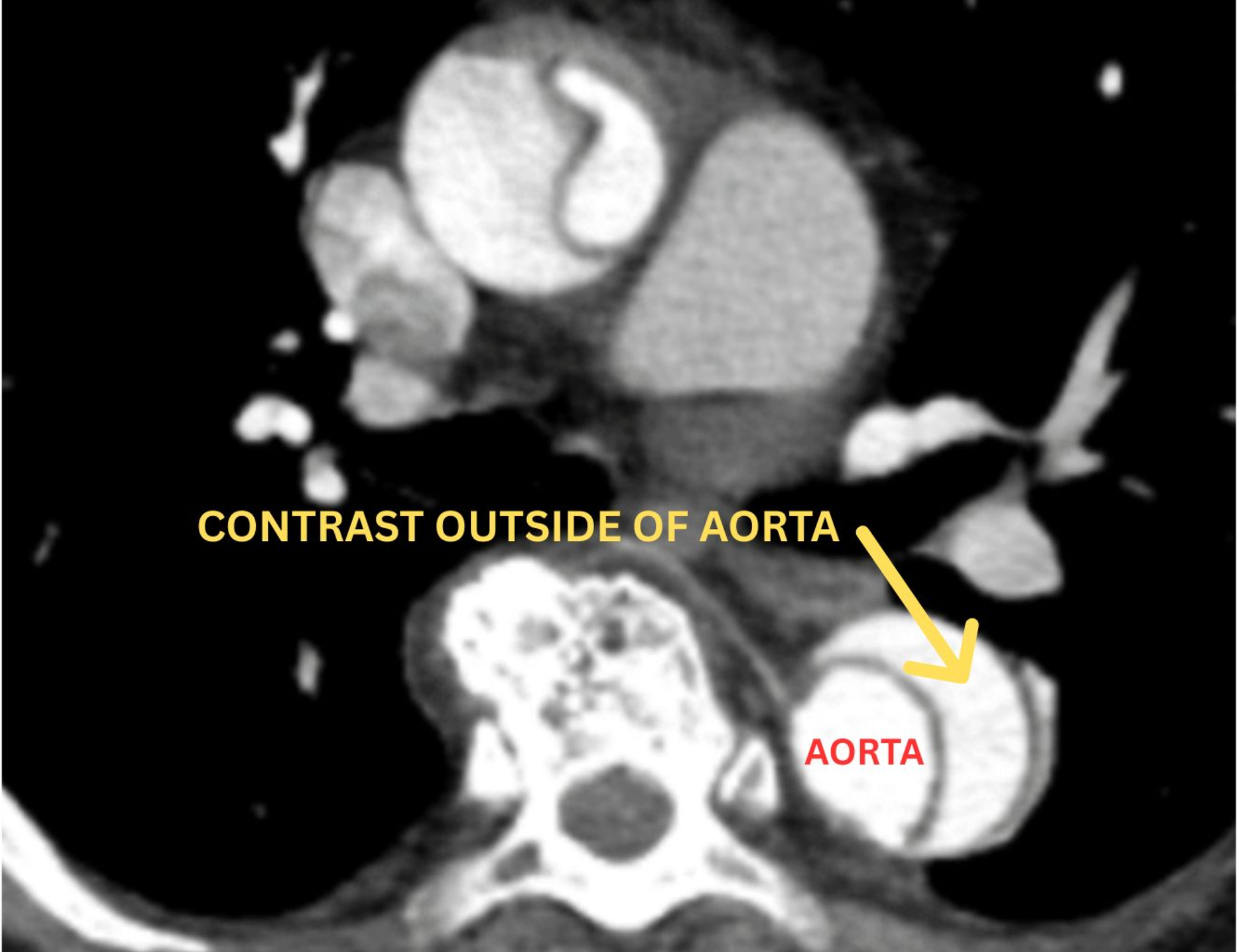
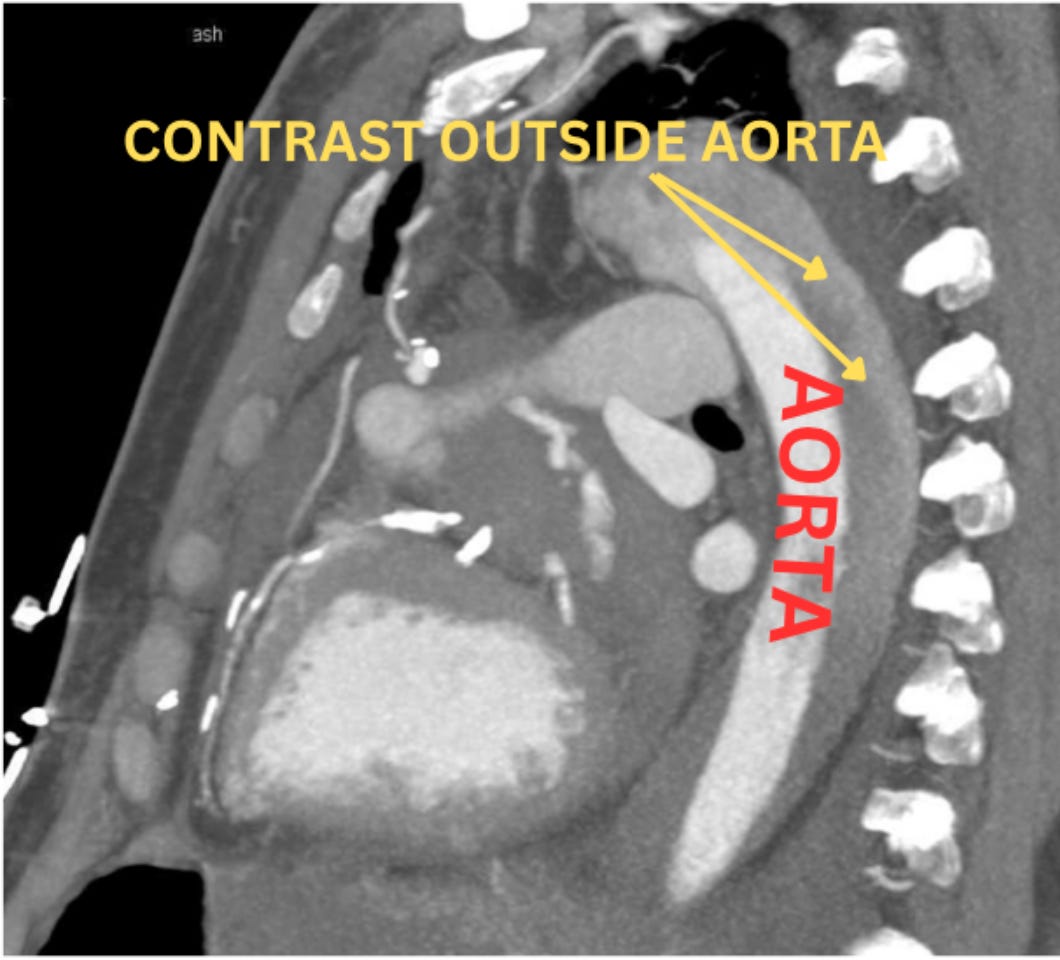
Diagnosed by contrast enhanced CT scan of the Thorax:
(a Type B dissection which is more common:
DeBakey Type III in Radiology Terminology)
Who Is at Risk?
While aortic dissection can occur in anyone, certain factors significantly increase your risk:
High blood pressure: The single biggest risk factor, present in the majority of cases. Chronic hypertension puts constant stress on the aortic wall, weakening it over time.2
Age and gender: Most commonly affects men in their 60s and 70s, fitting Graham’s profile exactly.2 3
Arteriosclerosis: Hardening and narrowing of the arteries due to plaque buildup, which was specifically noted in Graham’s case.1 5
Genetic predisposition: Family history plays a role, as Graham’s father died of a heart attack in his late 60s.2
Connective tissue disorders: Conditions like Marfan syndrome or Ehlers-Danlos syndrome can weaken blood vessels.
Trauma: Severe chest injuries can sometimes trigger dissections.
Smoking and high cholesterol: These contribute to arterial damage over time.
Recognizing the Warning Signs
The key to surviving an aortic dissection is immediate recognition and treatment. The hallmark symptom is sudden, severe chest or back pain often described as “tearing” or “ripping” - many patients report it as “the worst pain of their life.”2 Other symptoms may include:
Sudden, intense pain that starts in the chest and radiates to the back or between the shoulder blades.
Pain that moves to other areas as the dissection progresses along the aorta.
Shortness of breath.
Loss of consciousness (fainting).
Sudden difficulty speaking, vision problems, or weakness on one side of the body. (if blood flow to the brain is affected)
Pulse abnormalities or unequal blood pressure in different arms.
Severe abdominal pain.
What makes aortic dissection particularly dangerous is how closely its symptoms can mimic other conditions like heart attack, pulmonary embolism, or even musculoskeletal pain. This confusion can lead to delayed diagnosis and treatment.
How Is It Diagnosed and Treated?
When aortic dissection is suspected, every minute counts. In the emergency setting, doctors will typically:
Perform imaging tests immediately - usually a CT angiogram, transesophageal echocardiogram, or MRI to visualize the aorta and confirm the tear
Administer medications to lower blood pressure and reduce the force of heart contractions
Prepare for emergency surgery or intensive medical management depending on the type and location of the dissection
Treatment depends on whether the dissection affects the ascending aorta (Type A) or descending aorta (Type B):
Type A dissections (affecting the part of the aorta that rises from the heart) require immediate emergency surgery to repair the tear and potentially replace the damaged portion of the aorta. Without surgery, mortality is approximately 50% within 48 hours.
Type B dissections (in the descending aorta) are typically managed first with aggressive blood pressure control and pain management. Surgery may be needed if complications develop, such as impaired blood flow to organs or risk of rupture.
Long-term treatment involves strict blood pressure control, regular imaging to monitor the aorta, and lifestyle modifications to reduce stress on the arterial walls.
What Can You Do to Protect Yourself?
While some risk factors like age and genetics can’t be changed, there are steps you can take to reduce your risk:
Control your blood pressure: This is the single most important preventive measure. Have it checked regularly and follow your doctor’s recommendations for management.
Don’t ignore sudden chest pain: If you experience sudden, severe chest or back pain, call emergency services immediately. Specifically ask if aortic dissection could be considered in the diagnosis.2
Know your family history: If close relatives have had aortic problems, inform your doctor and consider screening.
Manage cholesterol levels: Keep your cholesterol within recommended ranges through diet, exercise, and medication if needed.
Avoid smoking: Smoking damages blood vessels and accelerates arteriosclerosis.
Seek immediate care for traumatic chest injuries: Even if you feel fine initially, get checked after significant chest trauma.
Senator Graham’s tragic death serves as a stark reminder that cardiovascular emergencies can strike without warning. By understanding the signs and symptoms of aortic dissection and acting quickly when they occur, we can improve the chances of survival for those affected by this devastating condition.
Essential Resources for Understanding Aortic Dissection
For readers who want to dive deeper into understanding aortic dissection, here are some authoritative resources from leading medical institutions and organizations:
Comprehensive Medical Information
Johns Hopkins Medicine - Aortic Dissection: Detailed overview covering causes, symptoms, diagnosis, and treatment approaches from one of the world’s premier cardiovascular centers.
Cleveland Clinic - Aortic Dissection: Excellent patient-focused resource with clear explanations of types, risk factors, and treatment options from a renowned heart and vascular center.
Mayo Clinic - Aortic Dissection: Comprehensive information including diagnostic approaches and detailed treatment options from one of America’s top hospitals.
American Heart Association - Aortic Dissection: Trusted source with accessible explanations of the condition, risk factors, and prevention strategies.
Research and Professional Resources
National Institutes of Health - Aortic Dissection: Authoritative government resource with detailed scientific information about the condition and current research directions.
Society of Thoracic Surgeons - Aortic Dissection: Professional surgical society perspective with detailed information about surgical interventions and outcomes.
European Society of Cardiology - Aortic Dissection Guidelines: Professional clinical practice guidelines for healthcare providers (more technical but comprehensive).
Patient Support and Advocacy
Thoracic Aortic Disease Coalition: Patient advocacy organization with educational resources and support networks for affected individuals and families.
John Ritter Foundation: Organization founded after actor John Ritter’s death from aortic dissection, focused on raising awareness and supporting research.
Could SPIKE PROTEIN induced endothelial inflammation have played a part?
My colleague, Robert W. Chandler, MD MBA has been working with European doctors to share the autopsy findings following sudden deaths in the COVID shot era; a lot of work was done by the late Prof Arne Burkhardt.
Read Dr Chandler’s latest substack for the latest information on this